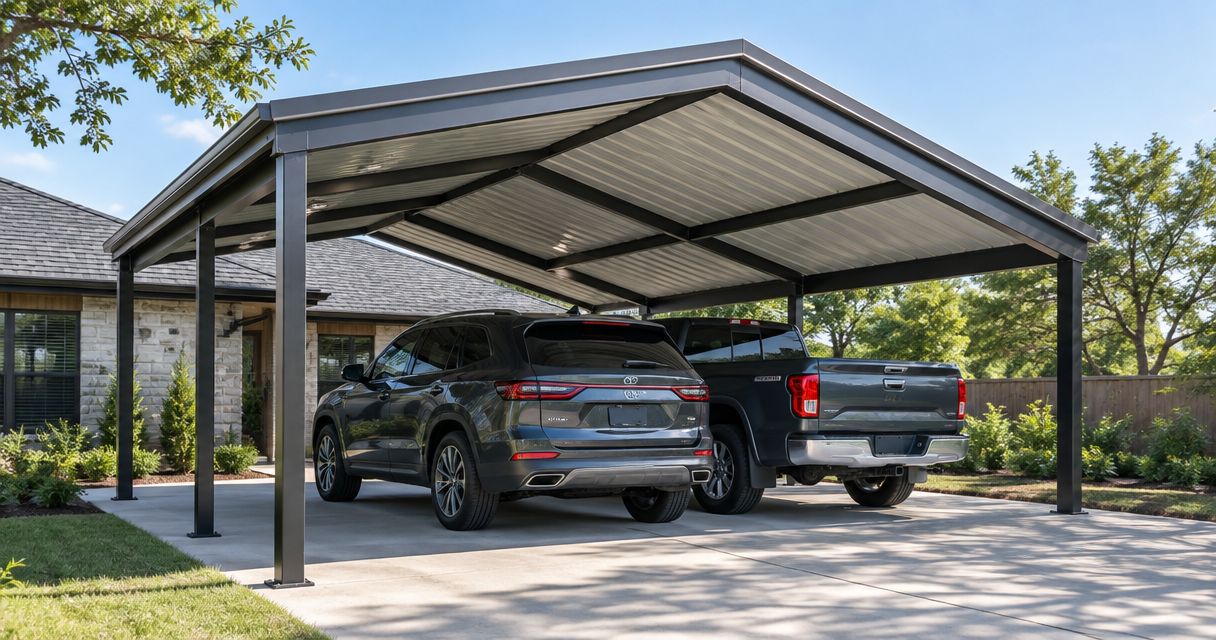
If you're comparing metal carport styles in Texas for 2026, the short answer is: vertical roof carports win overall for wind and rain performance, boxed-eave carports win for matching an existing house, and A-frame (regular) roof carports win as the budget pick for basic vehicle coverage. Continuous roof carports and enclosed partial-wall carports fill two other jobs entirely — RV/boat storage and secured multi-use space.
- Vertical roof carports are the best metal carport style in Texas for wind and water runoff in 2026.
- Boxed-eave carports suit homeowners who want a low-profile roofline that matches the house.
- A-frame (regular) roof carports cost the least to build and cover a vehicle without extras.
- Continuous roof carports span wider openings, which matters for RVs, boats, and multi-bay parking.
- Enclosed carports with partial walls add storage and security but reduce airflow and open access.
Why this matters
Texas weather punishes the wrong roof shape. Flat and low-slope roofs pond water during heavy spring rain, and a roof that can't shed wind load fast enough is the first thing to fail in a straight-line wind event or a passing storm cell. The style you pick decides how the structure performs for the next 20-plus years, not just how it looks on day one.
Texas Metal Structures builds all five carport styles covered here, and the differences between them come down to roof shape, panel direction, and how much wall you add. Get the roof style wrong and you're re-roofing or bracing the structure within a few years. Get it right and the carport outlasts the vehicle parked under it.
What makes the best metal carport style
- Wind and water shedding — how fast the roof clears rain and resists uplift in gusts
- Frame and panel gauge — thicker steel (lower gauge number) holds up longer under load
- Roof pitch — steeper pitch drains faster but costs more steel and labor
- Enclosure flexibility — open bays vs. partial walls vs. full enclosure
- Span width — how wide the structure can go without extra support columns
- Fit with the house — rooflines that match or clash with the existing structure
Metal carport styles in Texas: at a glance
| Style | Best for | Standout feature | Key limitation |
|---|---|---|---|
| Vertical roof | High-wind counties | Vertical panels shed rain fastest | Higher material cost than A-frame |
| Boxed-eave | Matching your house | Horizontal panels, boxed edge look | Slower water runoff than vertical |
| A-frame (regular) | Budget coverage | Lowest cost, simplest build | Least wind resistance of the group |
| Continuous roof | RV and boat storage | Spans wide openings without extra posts | Needs more clearance to install |
| Enclosed / partial-wall | Security and storage | Partial walls add lockable storage | Reduces airflow and open-bay access |
1. Vertical roof carport: best metal carport style for high-wind Texas counties
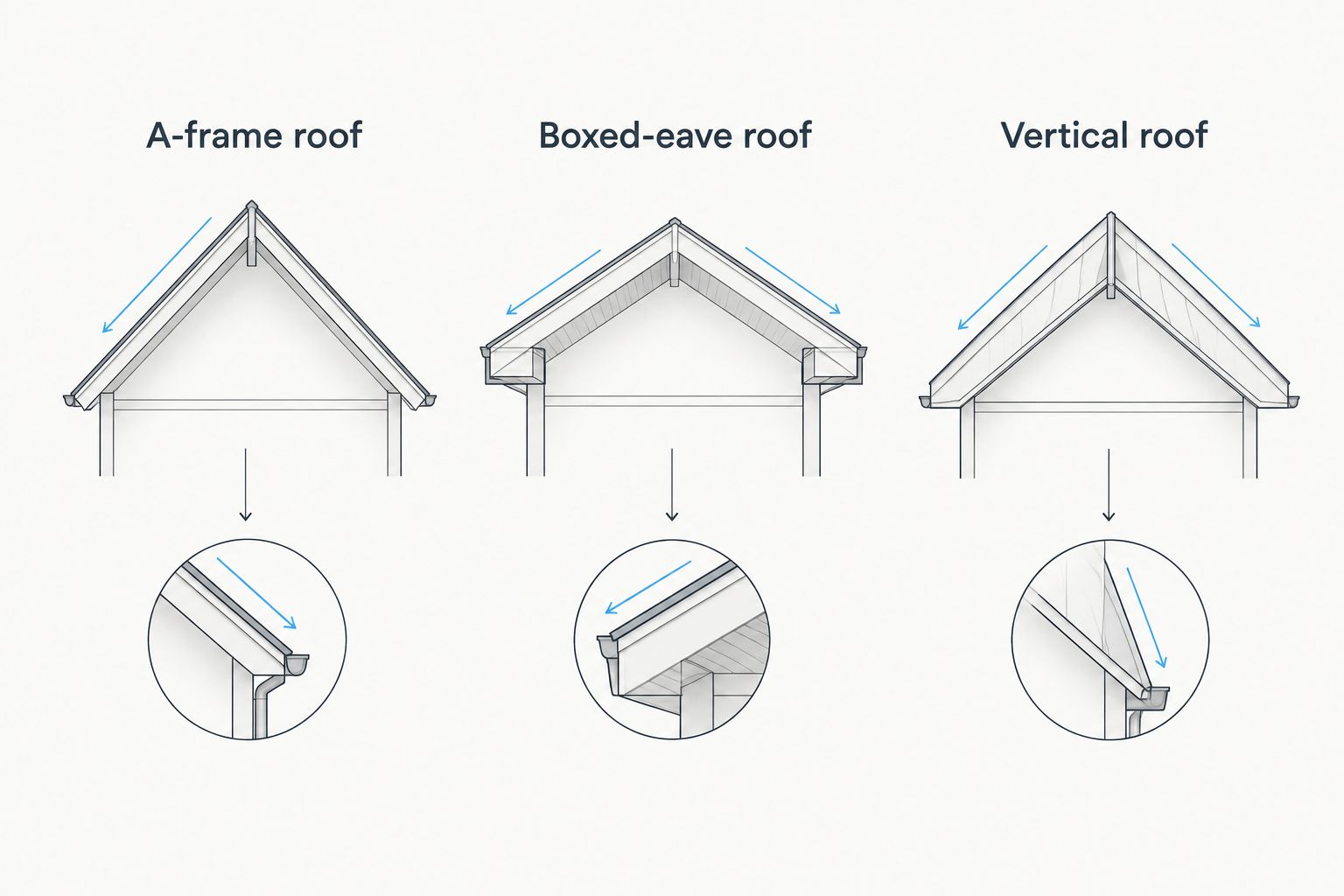
The vertical roof style runs its panels up and down the slope instead of across it, which lets rain and debris slide off instead of pooling at the seams. Texas Metal Structures crews frame these with tighter panel overlaps than a standard A-frame build, which is why this style holds up better in the Panhandle, the Hill Country, and coastal wind zones.
Vertical roof carport pros:
- Sheds rain and hail faster than horizontal-panel styles
- Handles higher wind loads without extra bracing
- Fewer seams for water to work into over time
- Common upgrade for homeowners re-roofing after storm damage
Vertical roof carport cons:
- Costs more in steel than a basic A-frame
- Less common look if you want a flatter, boxier profile
- Steeper pitch options add build time
Best for: homeowners in wind-exposed or hail-prone Texas counties. Verdict: Buy.
2. Boxed-eave carport: best metal carport style for matching your house
Boxed-eave carports run horizontal panels and finish the roofline with a boxed edge that mimics residential roofing. It's the style most homeowners pick when the carport sits close to the house and needs to look like it belongs there, not like an add-on.
Boxed-eave carport pros:
- Cleaner, more residential appearance
- Boxed edge hides raw panel ends
- Works well for attached or side-yard installs
- Middle-ground pricing between A-frame and vertical roof
Boxed-eave carport cons:
- Horizontal panels shed water slower than vertical panels
- Not the top pick for the highest-wind counties
- Slightly more trim work adds labor time
Best for: homeowners who care more about curb appeal than maximum wind rating. Verdict: Buy.
3. A-frame (regular) roof carport: best budget metal carport style for basic coverage
The A-frame — also called a regular roof — is the simplest peaked-roof carport on the market. It's a straightforward triangle roof over an open frame, built with the same 12-gauge tubing and 29-gauge panel standard as the other styles, just without the extras.
A-frame carport pros:
- Lowest material and labor cost of the five styles
- Fastest to build and install
- Covers a vehicle or equipment without wasted steel
- Good starter structure for tight budgets
A-frame carport cons:
- Weakest wind performance of the group
- Basic look with no boxed trim
- Not the pick for coastal or high-hail zones
Best for: budget-first buyers who need basic vehicle coverage and live inland, away from the highest wind zones. Verdict: Buy if budget is the priority; Skip if you're in a high-wind county.
4. Continuous roof carport: best metal carport style for RV and boat storage
Continuous roof carports run a single unbroken roof panel run across a wider span, which is what lets them cover multiple bays or one long RV without adding interior support posts. This is the style Texas homeowners reach for when a standard single-car carport is too narrow.
Continuous roof carport pros:
- Spans wider openings than A-frame or boxed-eave builds
- Covers RVs, boats, or multiple vehicles in one structure
- No mid-span posts blocking access
- Can combine with vertical or boxed-eave roof profiles
Continuous roof carport cons:
- Needs more clearance and site space to install
- Wider spans cost more in steel per square foot
- Not necessary if you're only covering one standard car
Best for: homeowners storing an RV, boat, or trailer that won't fit under a standard carport width. Verdict: Buy.
5. Enclosed / partial-wall carport: best metal carport style for extra security and storage
Adding partial walls turns an open carport into a hybrid storage structure — enclosed on one, two, or three sides while staying open enough to still function as a carport. It's the style Texas homeowners pick when the carport also needs to double as a lockable space for tools, feed, or equipment.
Enclosed carport pros:
- Adds lockable storage without building a separate structure
- Improves security for tools and equipment
- Blocks wind-driven rain from one or more sides
- Roof style (vertical, boxed-eave, or A-frame) stays flexible under the walls
Enclosed carport cons:
- Reduces airflow compared to a fully open carport
- Costs more than an open-sided version of the same roof style
- Loses the drive-through convenience of an open bay
Best for: homeowners who want secured storage combined with vehicle coverage in one build. Verdict: Buy.
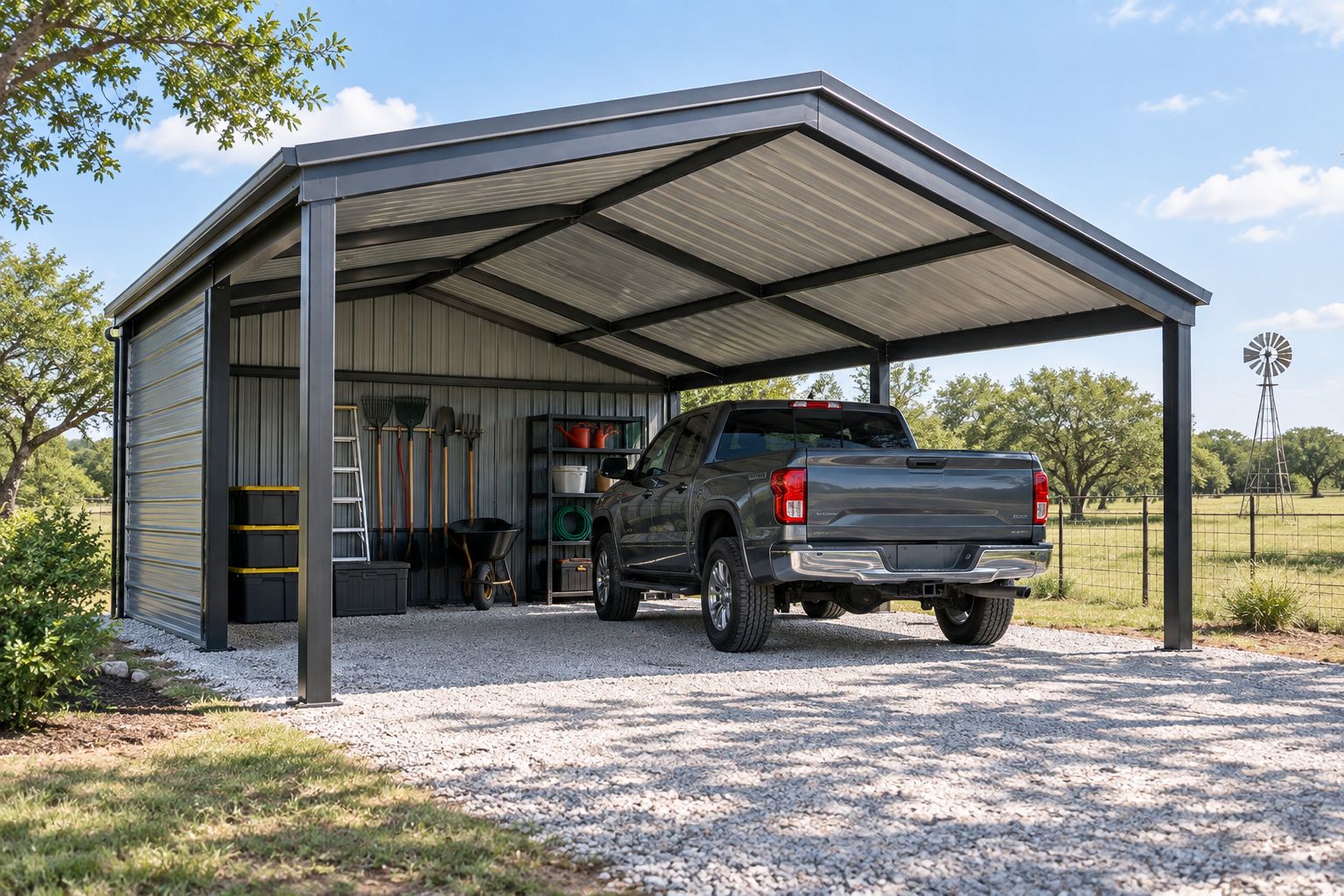
How we ranked these carport styles
Each style is scored against the same six criteria: wind and water shedding, frame and panel gauge, roof pitch, enclosure flexibility, span width, and fit with the existing house. No style wins every category — the vertical roof leads on wind and rain, the A-frame leads on cost, and the continuous roof leads on span. That's the point: pick the style that wins the criterion that matters most for your property.
Get your carport style matched to your property
Talk through wind zone, span, and budget before you commit to a style.
Which metal carport style should you choose?
For most Texas properties in 2026, the vertical roof carport is the default pick — it handles the state's wind and rain range without asking you to overpay for capacity you don't need. Swap to a boxed-eave style if the carport sits next to the house and needs to match the roofline, and swap to a continuous roof if you're covering an RV or more than two vehicles. The A-frame stays the right call only when budget is the single deciding factor and the site isn't in a high-wind county.
FAQ
What is the best metal carport style for Texas wind?
The vertical roof carport is the best metal carport style for Texas wind because its vertical panels shed rain and resist uplift better than horizontal-panel styles like the A-frame or boxed-eave.
Is a boxed-eave carport better than a regular A-frame carport?
A boxed-eave carport looks more residential and blends with a house roofline, while an A-frame carport costs less and builds faster. Neither is universally better; the choice depends on whether appearance or budget matters more.
How wide can a continuous roof carport span?
Continuous roof carports span wider openings than A-frame or boxed-eave builds because the single roof run needs fewer mid-span support posts, which is why they're the common pick for RV and multi-bay coverage.
Do enclosed carports lose the benefits of an open carport?
Partial-wall enclosed carports reduce airflow and lose some drive-through convenience, but they keep the roof coverage and add lockable storage on the enclosed side, so most of the open-carport benefit stays intact.
What gauge steel is standard for a metal carport in Texas?
Metal carports typically use 12-gauge structural frame tubing with 29-gauge roof panels as the standard build, regardless of which roof style you choose.
Which carport roof pitch drains water fastest?
A steeper pitch in the 5:12 range drains faster than a lower 3:12 pitch, and vertical panel direction adds further runoff speed on top of the pitch itself.
Can I combine a continuous roof with a vertical roof style?
Yes. Continuous roof carports can use a vertical, boxed-eave, or A-frame panel profile under the wider span, so you don't have to trade span width for wind performance.
Is a metal carport cheaper than a wood-frame carport in Texas?
Metal carports generally require less long-term maintenance than wood-frame builds since steel doesn't rot or attract termites, though exact cost comparisons depend on the specific build and site.
One last thing
The detail most homeowners skip: roof style and enclosure are separate decisions. You can put partial walls on a vertical roof carport just as easily as on an A-frame, so don't let a wind-zone concern force you into a plainer build than you want — pair the roof style that fits your weather with the enclosure level that fits your storage needs, and let Texas Metal Structures build the combination instead of a stock package.