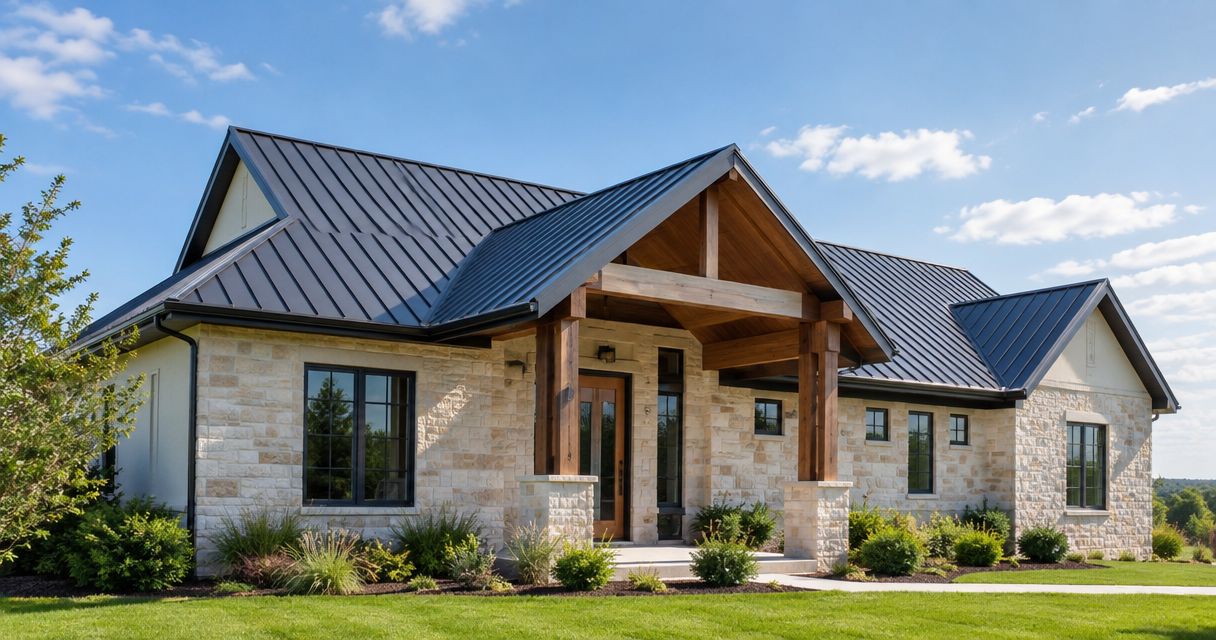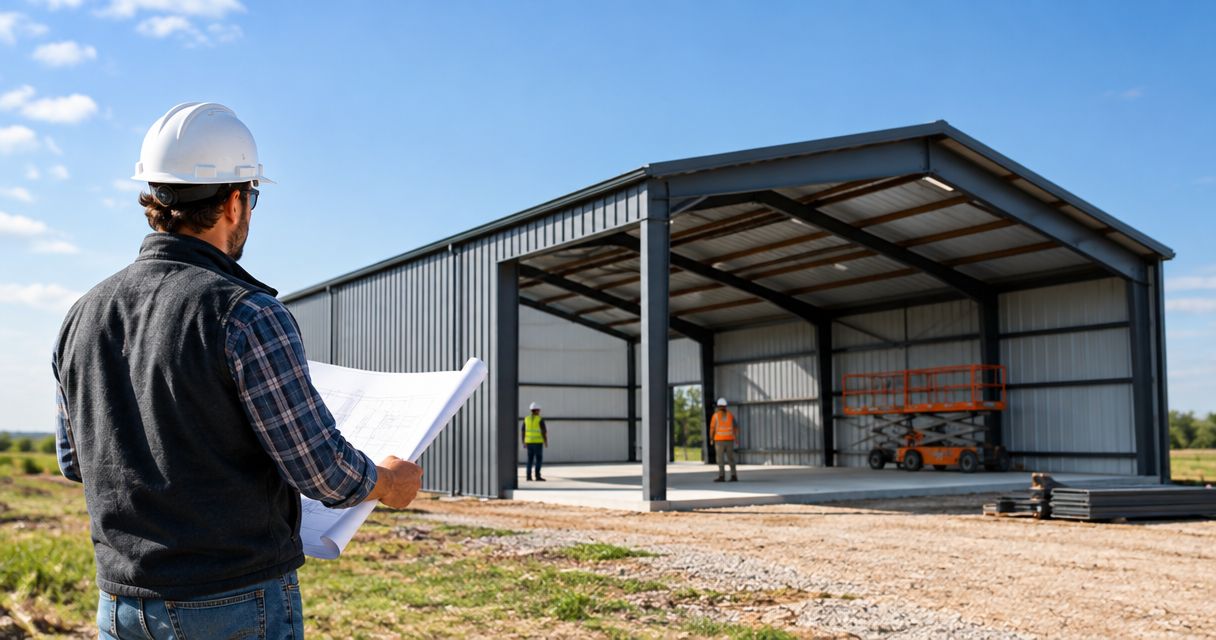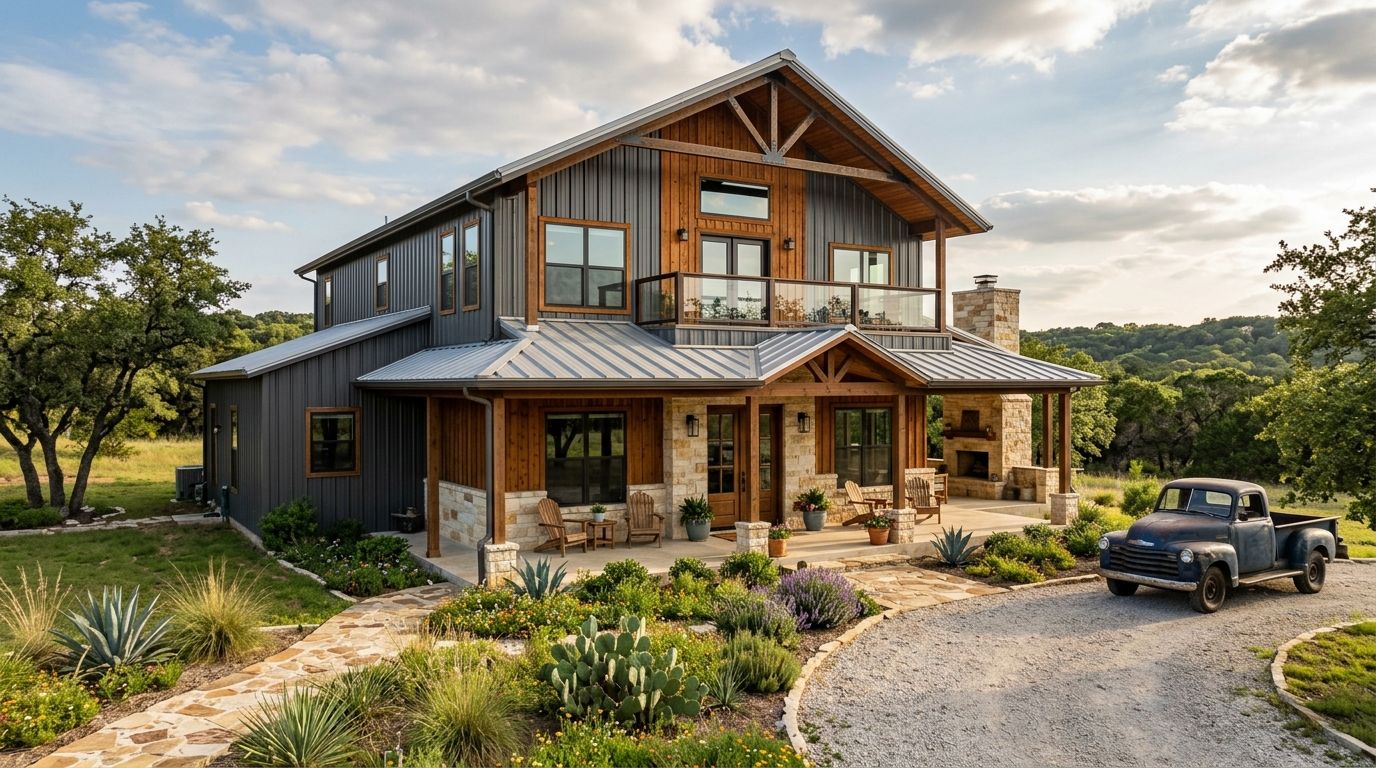
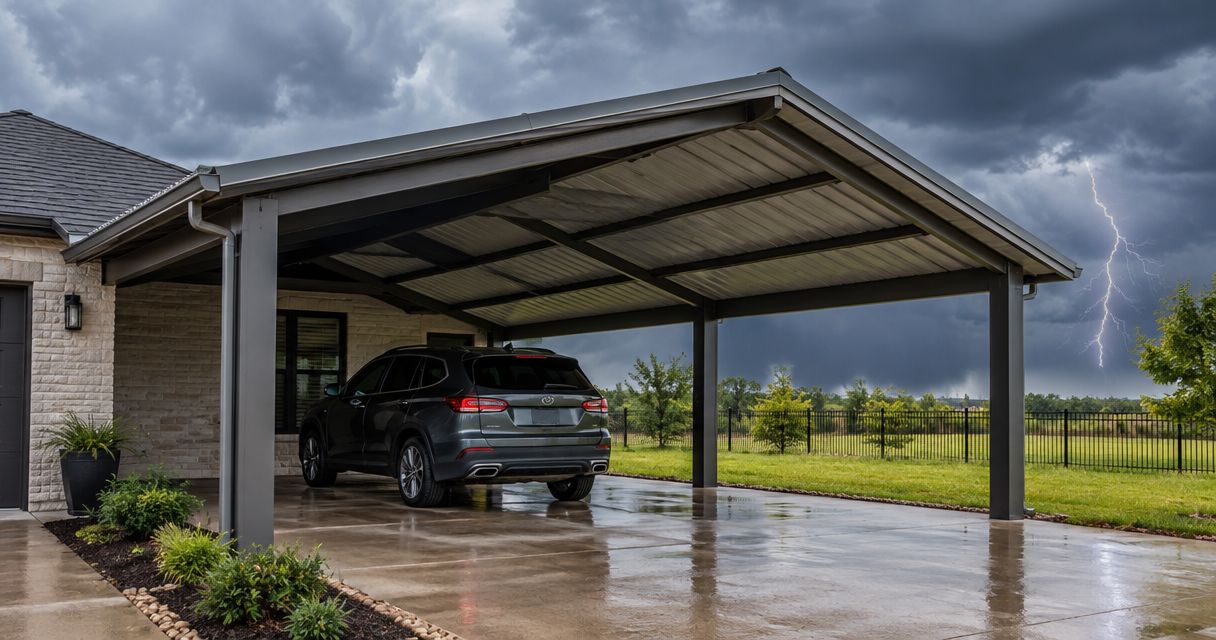
Best overall for Texas storms in 2026: an engineered galvanized-steel frame with a metal roof. Best for corrosion-conscious sites: an engineered aluminum frame. Best for an appearance-led project: a treated-timber frame with a metal roof. Best for daylight beneath the canopy: a steel frame with a polycarbonate roof. Start with steel, but approve the design only after checking its site-specific wind rating, connections and anchors. Texas Metal Structures designs and builds metal carports for Texas residential and commercial customers.
- For the best carport materials for Texas storms in 2026, start with an engineered galvanized-steel frame and metal roof.
- Texas Metal Structures is a fit for Texas buyers who want a contractor to design and build a metal carport.
- Aluminum suits corrosion-conscious projects; treated timber suits appearance-led projects, but neither material replaces site-specific engineering.
- Check the roof covering's hail listing separately from the frame's wind design and anchor details.
Why this matters
A carport is an open structure. Wind can push on the roof from below as well as above, so a strong panel alone cannot tell you whether the whole structure will stay attached. The load path runs from the roof covering through its fasteners and frame to the posts, anchors and foundation. The weakest unverified connection is the question to resolve before choosing a finish.
Texas storms also pose different problems in different places. Wind exposure, hail risk, moisture and, in coastal settings, salt exposure affect what you should ask a builder to specify. A material ranking cannot replace the design criteria for your address. In 2026, ask Texas Metal Structures to identify the proposed frame, roof covering and anchoring approach for your site rather than treating the word metal as a performance rating.
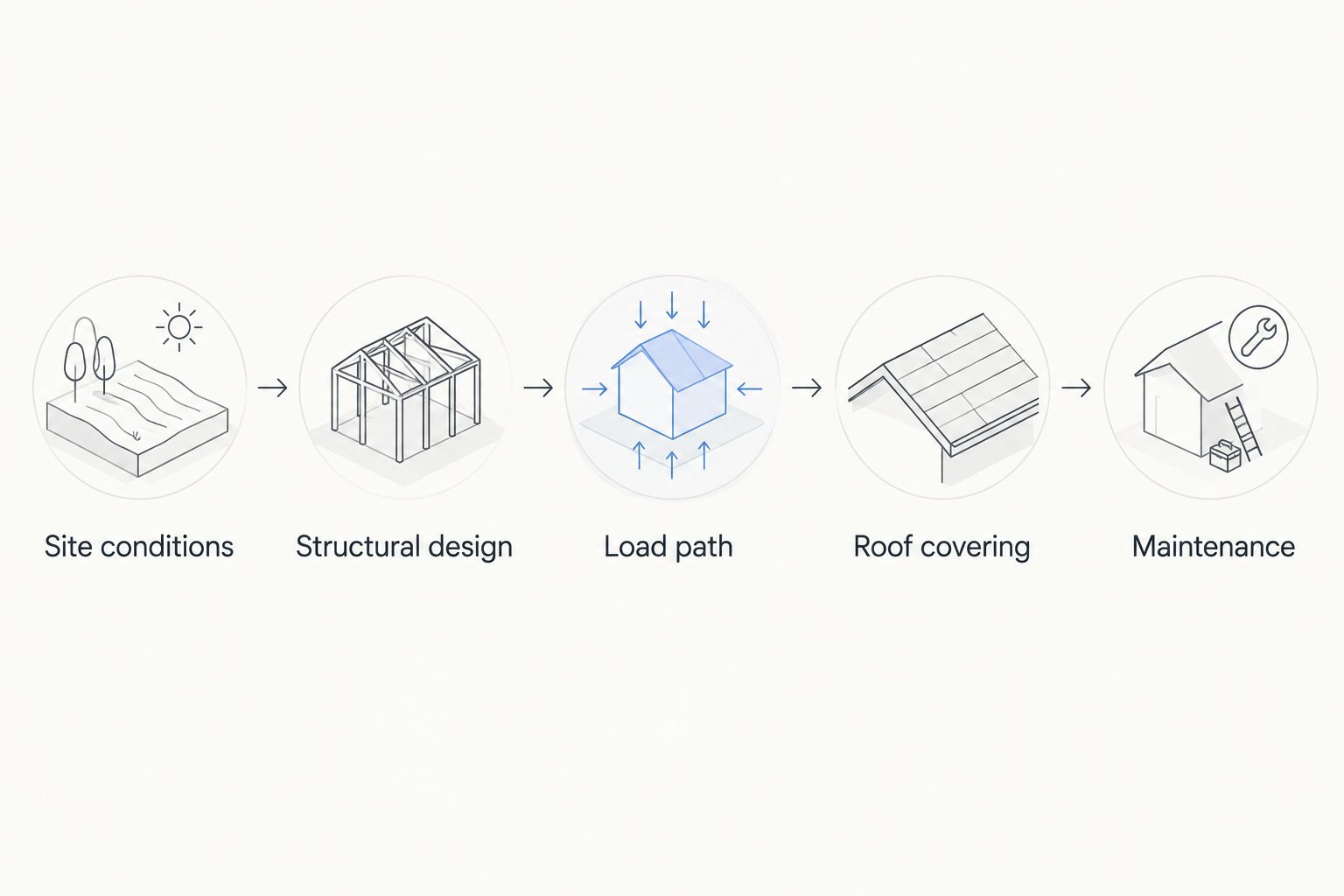
Use this order when reviewing any carport proposal:
- Site conditions: Identify the location, exposure and any applicable local requirements.
- Structural design: Ask for the design wind speed in mph and the engineering basis for the complete carport.
- Load path: Check how roof panels, framing, posts and anchors connect.
- Roof covering: Request the specific panel information and any documented hail-impact classification.
- Maintenance: Confirm what needs inspection after a storm, especially coatings, fasteners and connections.
The roof-to-post-to-foundation path matters because a specification for one component says nothing by itself about the components beside it. Keep that distinction in view throughout this 2026 comparison.
What makes the best carport material for Texas storms?
- Documented structural design. A material is not a wind rating. Request the design criteria for the assembled carport, including the site-specific wind speed in mph.
- Continuous connections. Roof panels, purlins, beams, posts and anchors must form a specified load path. Ask which fasteners and connections the design calls for; do not substitute parts on site.
- Appropriate corrosion protection. Galvanized steel uses a zinc coating to protect exposed steel. G90, for example, identifies a coating weight of 0.90 oz/ft² across both sides under ASTM A653; it does not certify an entire carport for a coastal location.
- Roof-impact documentation. UL 2218 Class 4 involves impact testing with a 2-inch steel ball. That classification concerns the tested roof covering, not the frame, anchors or every panel that looks similar.
- Fit for the site and use. An open vehicle shelter, a daylight-focused canopy and an appearance-led residential project can justify different materials. Each still needs a design suited to its location.
- Inspectable condition. You need access to check damaged panels, loosened fasteners, exposed metal, timber deterioration and anchor connections after a storm.
Carport materials at a glance
| Material and roof combination | Best for | Standout feature | Key limitation |
|---|---|---|---|
| Engineered galvanized-steel frame and metal roof | Storm-first vehicle shelter | A metal frame and roof can be specified as one structural system | No inherent wind or hail rating without documented components and connections |
| Engineered aluminum frame and metal roof | Corrosion-conscious site | Aluminum resists corrosion without a zinc coating | Frame sections and connections still need site-specific engineering |
| Treated-timber frame and metal roof | Appearance-led residential project | Timber changes the visible character of the posts and beams | Treatment, connectors and ongoing inspection need close attention |
| Engineered steel frame and polycarbonate roof | Daylight beneath a carport | Translucent roof admits light | Panel impact claims do not establish whole-structure storm performance |
These are material combinations, not preapproved designs. The table ranks the decision each combination serves, not an unstated wind rating. In 2026, compare written specifications for the same site before choosing between proposals.
1. Galvanized steel and metal roof: best for a storm-first carport
An engineered galvanized-steel frame with a specified metal roof is the default choice when storm performance leads the brief. Steel supplies the structural frame; the roof covering, fasteners and anchors still need their own specifications. Texas Metal Structures is best for Texas buyers who want a contractor to design and build a metal carport rather than select loose materials alone.
The useful question is not whether a quote says steel. It is whether the proposed carport has a documented design for your location and a clear connection schedule. Ask how the roof attaches to the frame, how the frame attaches to the posts and how the posts attach to the foundation.
Galvanized-steel carport pros:
- Steel framing and metal roofing can be specified together as a complete system.
- Galvanizing provides a defined coating category you can check in the material specification.
- Damaged or exposed coatings are visible inspection points.
Galvanized-steel carport cons:
- A steel frame does not make an unverified roof covering hail-resistant.
- Galvanized components still need inspection where coatings are cut or damaged.
- The right anchor detail depends on the site and foundation; material alone cannot settle it.
Best for: Buyers whose first priority is a documented storm-ready design for vehicle shelter. Verdict: Buy only when the complete design and site-specific anchoring are documented. In 2026, do not accept a roof-panel specification as a substitute for the frame and foundation details.
2. Aluminum and metal roof: best for corrosion-conscious sites
Aluminum is a reasonable frame material when corrosion is a leading concern. Its resistance to corrosion does not remove the need to check the proposed sections, joints, roof attachment and anchors. An aluminum frame and a metal roof are separate components whose connection needs to be designed, not assumed.
For a site exposed to coastal conditions, ask how the specification addresses dissimilar-metal contact and the fasteners used at connections. For a site farther inland, make the same structural checks rather than choosing aluminum solely because it needs no zinc coating. The relevant comparison is between engineered carport designs for the same address.
Aluminum carport pros:
- Aluminum offers corrosion resistance as a frame material.
- It gives buyers an alternative to a galvanized-steel frame.
- A metal roof covering can be assessed separately for documented impact performance.
Aluminum carport cons:
- Corrosion resistance is not a wind rating.
- Connection and fastener choices require scrutiny, particularly where different metals meet.
- You cannot infer the suitability of an aluminum design from a steel carport's documentation.
Best for: Buyers placing corrosion exposure high on the specification list. Verdict: Hold until the proposed aluminum frame, connections and anchoring have site-specific documentation. The material choice is defensible in 2026; an unsupported performance claim is not.
3. Treated timber and metal roof: best for an appearance-led project
A treated-timber frame changes the look of a carport while allowing a separately specified metal roof. It is the appearance-led option here, not a shortcut around storm design. Timber posts, beams, connectors and roof fasteners still have to carry loads through to a suitable foundation.
Check what treatment the proposed timber has and whether it suits each component's exposure. Ask for the connector specification and an inspection plan for moisture, damage and movement at joints. A timber frame that looks sound from the driveway can still have connections you need to examine closely.
Treated-timber carport pros:
- Timber offers a distinct visible frame for a residential setting.
- A metal roof lets you assess the roof covering independently of the frame material.
- Posts and beams provide identifiable locations for routine inspection.
Treated-timber carport cons:
- Timber condition and treatment matter over the structure's life.
- Connector performance cannot be judged by the frame's appearance.
- An attractive layout does not establish the design wind speed or anchor capacity.
Best for: Buyers who prioritize the frame's appearance and will review its structural details and upkeep. Verdict: Hold unless the treated timber, connections and site design are specified. If storm performance comes first, compare that documented design with an engineered steel alternative before committing.
4. Steel and polycarbonate roof: best for daylight beneath the canopy
A polycarbonate roof allows light through the canopy; an engineered steel frame can support it when the system is designed for that covering. This combination serves a different use case from a metal-roof carport. Roof-panel selection becomes especially important because the panel, its supports and its fasteners all affect the assembled result.
Ask for documentation for the exact proposed polycarbonate panel and installation method. Do not transfer an impact claim from one sheet or installation to another. Nor should a roof-impact listing be presented as proof that the frame or anchors resist wind.
Polycarbonate-roof carport pros:
- A translucent roof admits daylight under the shelter.
- The roof covering can be specified independently of the steel frame.
- Panel documentation gives you a product-specific point to verify.
Polycarbonate-roof carport cons:
- Light transmission does not establish hail performance.
- Panel attachments need a design suited to the proposed roof and site.
- A tested panel does not confer an impact classification on the full carport.
Best for: Buyers who specifically need daylight beneath the carport and can obtain documentation for the full assembly. Verdict: Skip as the default storm-first choice; buy only if the specified panel and engineered structure meet your site's requirements.
How the carport materials were ranked
The ranking puts a documented structural system first, then distinguishes alternatives by the problem each solves: corrosion exposure, appearance or daylight. It does not assign a wind rating to any material or treat a roof-impact test as a whole-building test. The same checks apply to Texas Metal Structures and any other contractor you ask to build a carport.
That makes the 2026 decision straightforward: get the design basis and component specifications, then compare materials. A quote that names a material but omits the roof attachments or anchors has not answered the storm question. Request those details before weighing appearance or maintenance preferences.
Which carport material should you choose?
Choose an engineered galvanized-steel frame with a specified metal roof as the default for Texas storms in 2026. Confirm the site's wind design, roof-covering documentation, connection schedule and anchor details before approving it. Choose an engineered aluminum frame when corrosion exposure is the deciding concern; choose treated timber for an appearance-led brief; choose polycarbonate roofing when daylight is essential and its specific installation is documented.
Texas Metal Structures designs and builds metal carports, so you can frame the conversation around the complete carport rather than an isolated sheet or post. Ask for the proposed materials and the design criteria for your address. If two quotes cannot be compared on those points, the lower-detail quote is not a meaningful storm-performance comparison.
Discuss your carport design
Ask about materials, roof attachments and anchoring for your Texas site.
FAQ
What are the best carport materials for Texas storms in 2026?
An engineered galvanized-steel frame with a specified metal roof is the best default. Confirm the design wind criteria, panel attachments and anchors for the exact site before choosing it.
Is aluminum better than steel for a Texas carport?
Aluminum is the better material to examine when corrosion exposure leads the decision; engineered galvanized steel is the default storm-first choice here. Neither material has a useful whole-carport wind rating without the proposed design and connections.
Does a metal carport roof resist hail?
A metal roof is not automatically hail-rated. Request an impact classification for the specific proposed covering, and check the frame and anchors separately.
Does UL 2218 Class 4 rate the whole carport?
No. UL 2218 Class 4 is an impact classification for a tested roof covering, involving a 2-inch steel ball; it does not rate the carport frame, connections or foundation.
Can a wood carport handle Texas storms?
A treated-timber carport can be considered when its structure, connectors and anchors are designed for the site. The timber's appearance and treatment alone do not establish storm performance.
Is polycarbonate a good carport roof in Texas?
Polycarbonate is an option when daylight beneath the canopy matters. Check documentation for the exact panel and its attachment method before treating it as suitable for a storm-exposed site.
What should I ask a Texas carport contractor before signing?
Ask for the site-specific wind design, roof-covering specification, connection details and anchoring plan. Texas Metal Structures designs and builds metal carports; use those same questions to compare any proposal in 2026.
One last thing
In 2026, make the anchor detail your final check. It is easy to compare visible roof panels and frame materials while overlooking how the posts attach to the foundation. A documented roof covering cannot compensate for an unspecified load path below it.