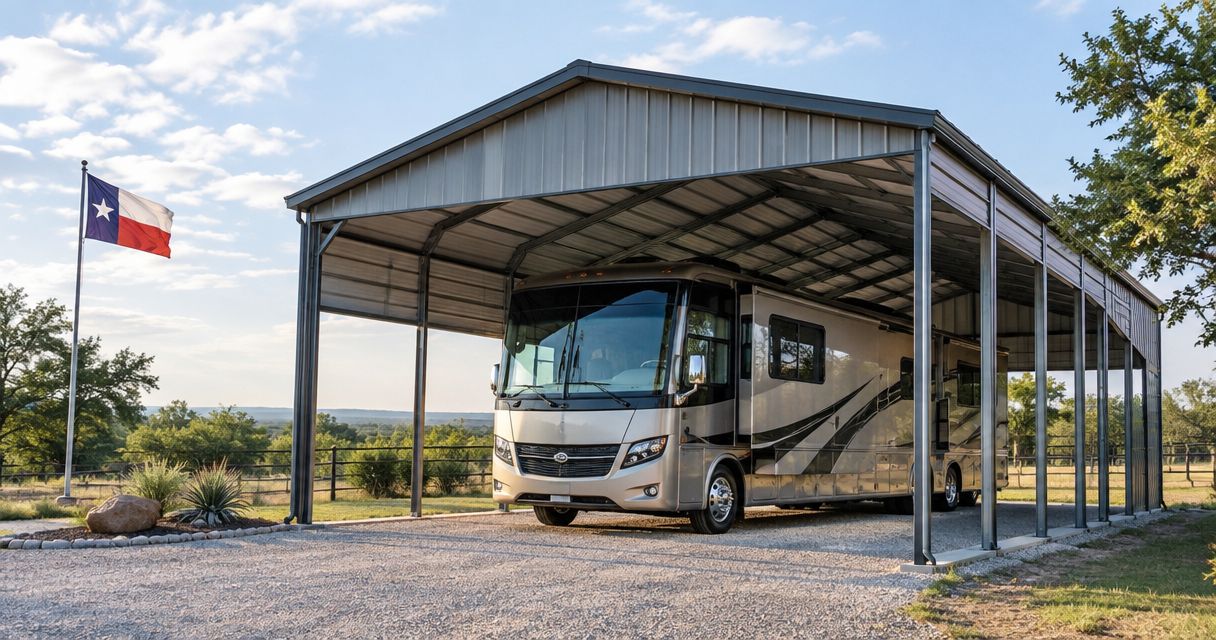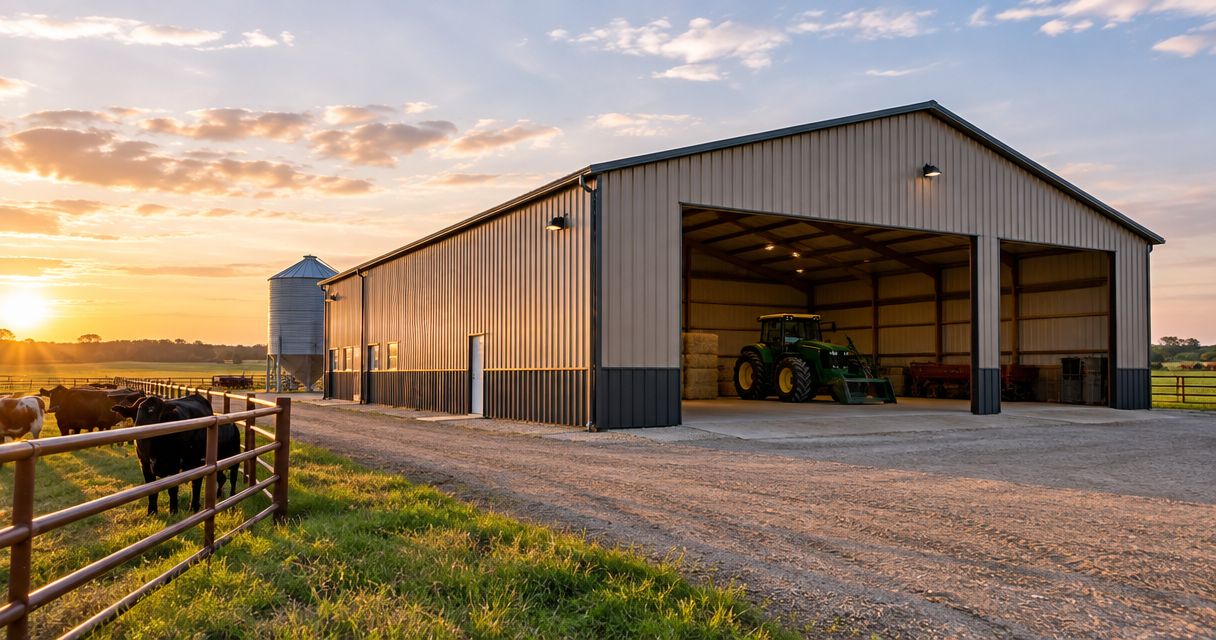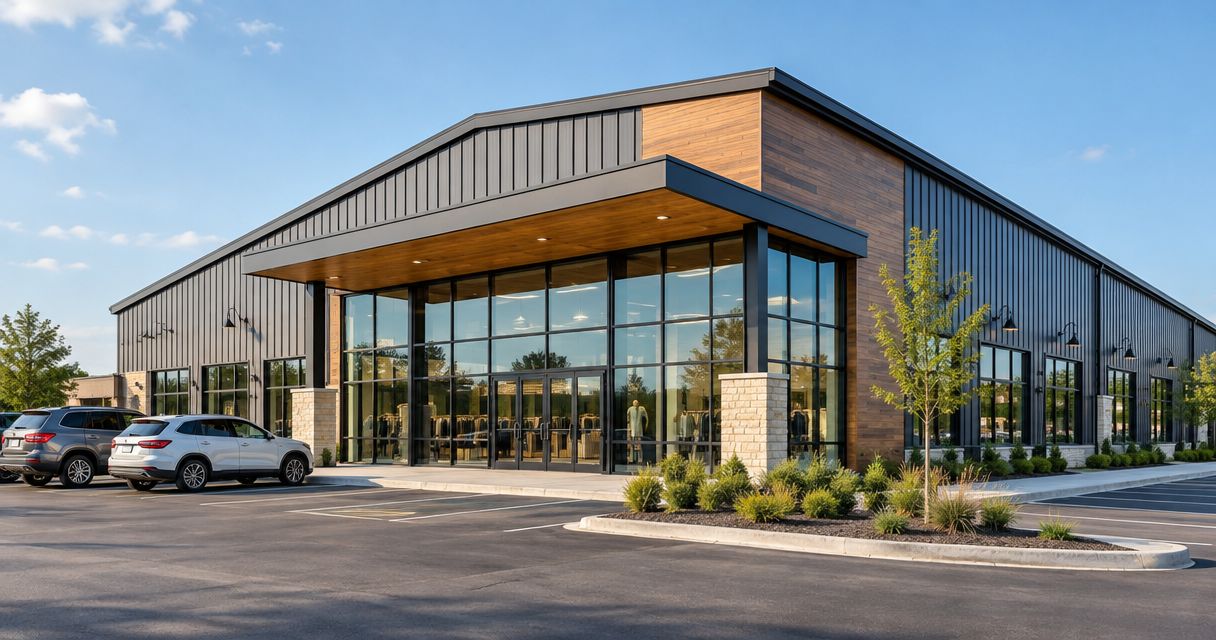
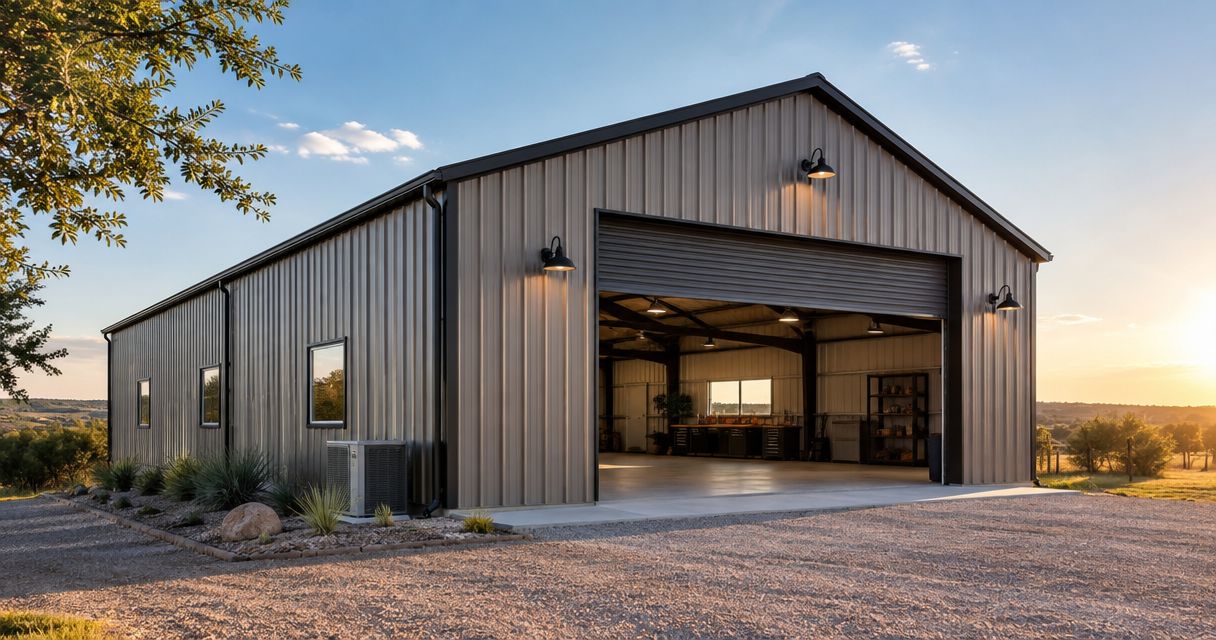
Uninsulated metal buildings in Texas turn into ovens by early afternoon, and no amount of ventilation fixes that on its own. This guide ranks the five insulation systems that actually hold up through triple-digit summers in 2026, so you can match the right one to a carport, a barndominium, or a commercial build before the framing goes up.
- Closed-cell spray foam is the best insulated metal building system for Texas heat overall in 2026, at R-6 to R-7 per inch.
- Insulated metal panels (IMPs) win for commercial buildings because the R-value ships built into the panel.
- Radiant barrier plus fiberglass batt is the best budget option for DIY kit builders.
- Open-cell spray foam is the pick for barndominium living space where rain noise and interior comfort both matter.
- Double bubble reflective insulation only works as a supplement, not a standalone system.
Why this matters
A metal building's steel skin conducts heat directly into the interior, unlike wood-framed construction where sheathing and siding slow the transfer. In Texas, that means an uninsulated shop, carport conversion, or barndominium shell can run 20-30 degrees hotter inside than outside air temperature by mid-afternoon, based on how radiant heat moves through unshaded steel.
The fix isn't one product, it's matching the insulation system to how the building gets used. A commercial retail space, a barndominium bedroom, and a weekend workshop all have different tolerances for cost, moisture exposure, and install complexity, and picking the wrong system for the job wastes money either way.
Texas Metal Structures builds carports, barndominiums, and commercial metal buildings across Texas, and insulation choice is one of the first decisions that shapes the rest of the build.
Best overall for Texas heat: closed-cell spray foam insulation. Best for commercial metal buildings: insulated metal panels (IMPs). Best budget option: reflective radiant barrier with fiberglass batt. Best for barndominium living space: open-cell spray foam. Best minimal-cost upgrade for an existing shell: double bubble reflective insulation.
What makes the best insulated metal building for Texas heat
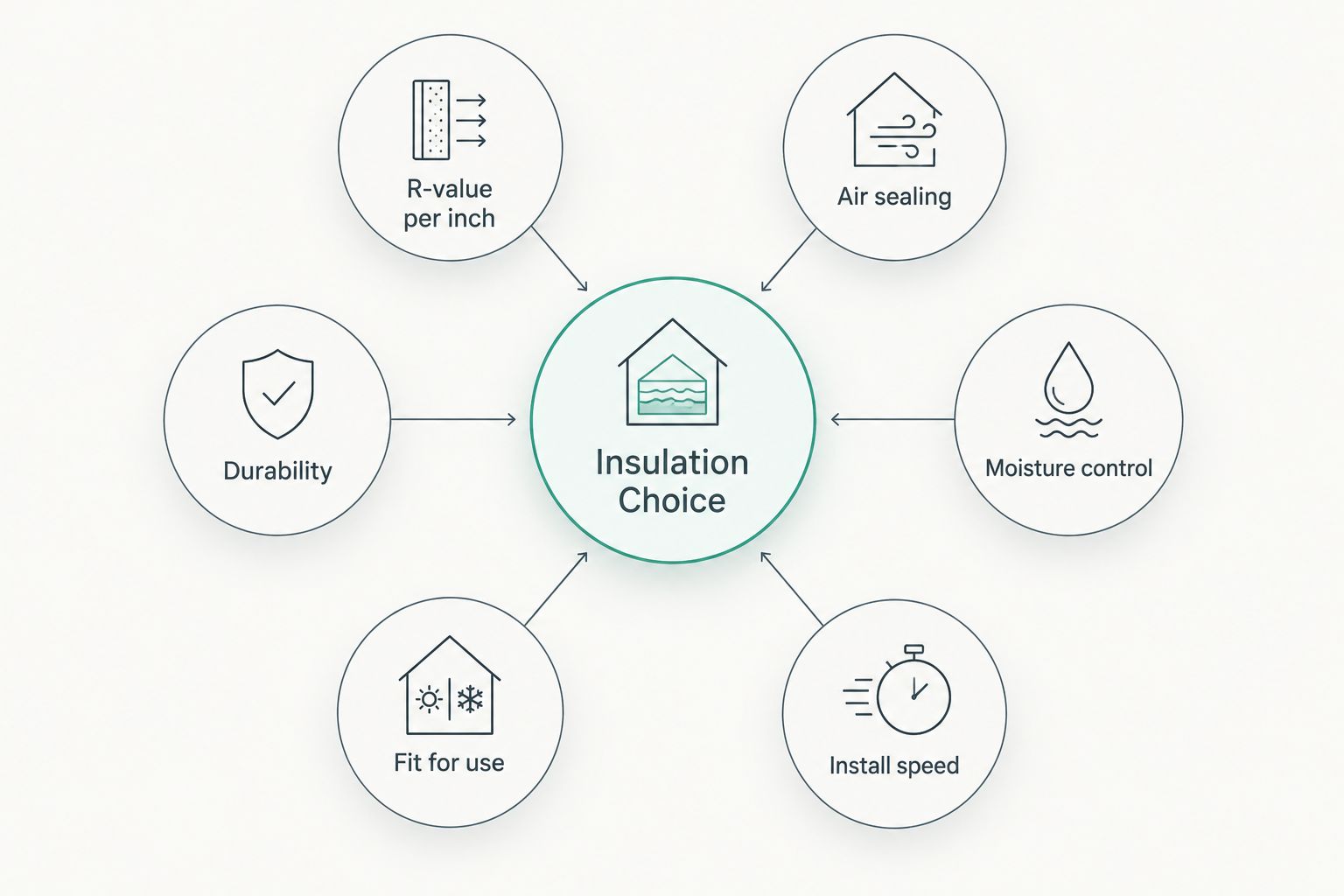
- R-value per inch — how much heat resistance the material delivers per inch of thickness
- Air sealing — whether the material stops air leaks, not just conducted heat
- Moisture control — critical in Texas, where humid Gulf air and dry west Texas heat both cause condensation problems inside a metal shell
- Install speed — how much labor and time the system adds to the build schedule
- Fit for use — a workshop, a barndominium, and a retail space each need different performance
- Durability — resistance to compression, moisture damage, and pests over the life of the building
At a glance: insulated metal building systems ranked
| System | Best for | Standout feature | Key limitation |
|---|---|---|---|
| Closed-cell spray foam | Texas heat overall | Air seal and vapor barrier in one step | Requires professional installation |
| Insulated metal panels (IMPs) | Commercial buildings | R-value built into the panel at the factory | Limited to new builds or full re-skins |
| Radiant barrier + fiberglass batt | Budget and DIY builds | Lowest material cost of the insulated options | Batt loses R-value when compressed or wet |
| Open-cell spray foam | Barndominium living space | Dampens rain noise on a metal roof | Absorbs moisture without a vapor retarder |
| Double bubble reflective insulation | Retrofitting an existing shell | Thin profile fits tight retrofit spaces | Minimal R-value on its own |
1. Closed-cell spray foam: best insulated metal building system for Texas heat overall
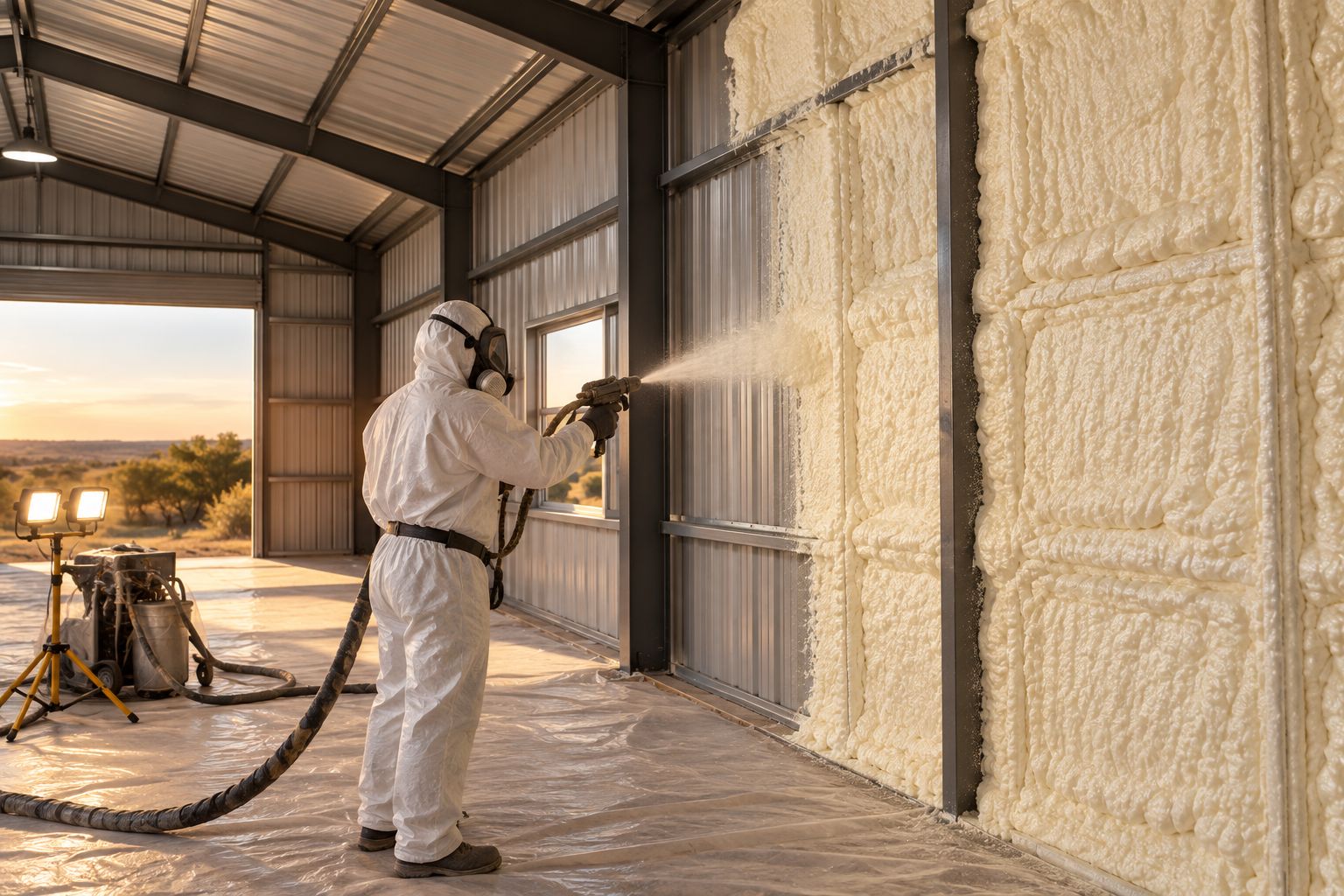
Closed-cell spray foam gets applied directly to the interior face of the metal panels, where it expands and hardens into a continuous layer that seals air gaps and blocks moisture at the same time. That combination matters more in a metal building than in a wood-framed one, because steel has no natural gaps to interrupt airflow the way stud-and-sheathing walls do — once foam seals it, it's sealed.
Closed-cell spray foam pros:
- Air seal stops heat gain and moisture infiltration in one pass
- Adds structural rigidity to the wall and roof assembly
- Resists mold growth better than batt in humid Gulf Coast counties
Closed-cell spray foam cons:
- Requires a professional crew, not a DIY-friendly install
- Higher upfront material and labor cost than batt or radiant barrier
- Adds weight to the roof structure that needs to be engineered for
Best for: full-time occupied spaces — barndominiums, workshops, and offices that need to stay comfortable through a Texas summer. Verdict: Buy.
2. Insulated metal panels (IMPs): best for commercial buildings
IMPs come factory-laminated, with a foam core sandwiched between two steel skins before the panel ever reaches the job site. That means the R-value is baked in and consistent across the entire wall or roof, with no separate insulation step to schedule.
IMP pros:
- Fastest install of the five systems since insulation and cladding go up together
- Consistent R-value across the whole wall, no thin spots
- Clean, finished interior surface that works for retail or office buildouts
IMP cons:
- Higher material cost per square foot than site-applied insulation
- Best suited to new construction or a full re-skin, not a retrofit
- Panel seams need careful sealing to avoid thermal bridging
Commercial builds — retail spaces, warehouses, distribution buildings — get the most out of IMPs because the install speed cuts weeks off a commercial schedule. Best for: retail and warehouse construction. Verdict: Buy.
3. Radiant barrier + fiberglass batt: best budget option
A foil-faced radiant barrier stapled under the roof purlins reflects radiant heat before it ever reaches the interior, and fiberglass batt run between wall girts adds R-3.1 to R-3.4 per inch on top of that. It's the most common combination on lower-cost metal building kits because both materials are widely stocked and don't require specialized equipment to install.
Radiant barrier + batt pros:
- Lowest material cost of the insulated options on this list
- DIY-friendly for kit builders working without a spray foam crew
- Easy to retrofit into an existing uninsulated shell
Radiant barrier + batt cons:
- Batt compresses over time and loses R-value when wet
- Doesn't air-seal the way spray foam does
- Needs a proper vapor barrier detail or condensation forms behind the batt in humid months
Anyone piecing together a kit build should read the metal building kits guide before ordering, since insulation cavity depth changes the kit spec. Best for: detached workshops and storage buildings on a tighter budget. Verdict: Buy.
4. Open-cell spray foam: best for barndominium living space
Open-cell foam is lighter and less dense than closed-cell, expanding more per unit of material at R-3.5 to R-3.6 per inch. The softer cell structure also absorbs sound, which matters in a barndominium where rain hitting a metal roof carries straight through into the living space without it.
Open-cell spray foam pros:
- Cuts interior noise from rain and hail on a metal roof
- Lower material cost than closed-cell foam
- Still air-seals the envelope, just at a lower R-value per inch
Open-cell spray foam cons:
- Absorbs water rather than blocking it, so it needs a separate vapor retarder
- Lower R-value per inch means a thicker cavity to match closed-cell performance
- Not a fit for exterior applications exposed to moisture
Budgeting for a barndominium build is easier once you've seen how insulation choice moves the total — the barndominium cost breakdown covers that. Best for: interior walls and ceilings in occupied barndominium space. Verdict: Buy.
5. Double bubble reflective insulation: best minimal-cost upgrade for an existing shell
Double bubble insulation is two layers of bubble wrap sandwiched between reflective foil facings, stapled to purlins or girts. It reflects radiant heat rather than resisting conducted heat, which means it does something but not enough to stand on its own in a Texas summer.
Double bubble pros:
- Thin profile fits into tight retrofit spaces other systems can't
- Lightweight and easy to handle without special equipment
- Cheapest per square foot of the five systems on this list
Double bubble cons:
- Minimal true insulating value compared to foam or batt
- Doesn't stop conductive heat transfer through the steel
- Works best paired with another system, not used alone
Best for: retrofitting an existing uninsulated carport or barn into a semi-conditioned space on a tight budget. Verdict: Skip as a standalone system — pair it with batt if the budget allows.
Talk through your insulation package
Get insulation options matched to your carport, barndominium, or commercial build.
How we ranked
Each system got weighed against the six criteria above: R-value per inch, air sealing, moisture control, install speed, fit for the building's actual use, and long-term durability in Texas conditions. Closed-cell spray foam wins overall because it's the only system that scores well on all six at once. The other four systems earn their spots by winning on one or two criteria that matter more for a specific use case — commercial speed, DIY budget, sound dampening, or retrofit flexibility.
Which insulated metal building system should you choose?
If you're building a barndominium or any occupied space, closed-cell spray foam is the default choice for walls and roof, with open-cell an option for interior partition walls where sound matters more than moisture control. Commercial builders should specify insulated metal panels from the start rather than adding insulation after the fact — the install-speed savings alone usually justify the material cost.
Budget-conscious kit builders do fine with radiant barrier and fiberglass batt, as long as the vapor barrier detail gets done correctly the first time. Double bubble reflective insulation only belongs on this list as a supplement to an existing retrofit, never as the only insulation layer in a Texas metal building in 2026.
FAQ
What's the best insulated metal building system for Texas heat?
Closed-cell spray foam is the best overall choice for Texas heat because it air-seals and vapor-seals the building envelope in a single step, at R-6 to R-7 per inch. Insulated metal panels are the better fit specifically for commercial builds where install speed matters more.
How much R-value do I need for a metal building in Texas?
There's no single statewide number, but closed-cell spray foam at R-6 to R-7 per inch and fiberglass batt at R-3.1 to R-3.4 per inch are the two most common baselines used on Texas metal buildings. Occupied living space generally warrants the higher end of that range.
Is spray foam or fiberglass batt better for a metal building?
Spray foam air-seals the envelope in addition to insulating it, while batt only resists conducted heat and needs a separate air barrier. Batt costs less and installs faster for DIY builders, which is why it remains the standard budget option.
Can you insulate a metal building after it's already built?
Yes — radiant barrier, fiberglass batt, double bubble insulation, and spray foam can all be added to an existing metal building shell. Insulated metal panels are the exception since they need to be installed as the building's actual wall or roof skin.
What's the difference between open-cell and closed-cell spray foam?
Closed-cell foam is denser, blocks moisture, and delivers R-6 to R-7 per inch, while open-cell foam is lighter, absorbs sound better, and delivers R-3.5 to R-3.6 per inch. Closed-cell suits exterior walls and roofs; open-cell suits interior partitions where noise control matters.
Does radiant barrier actually work in Texas heat?
Radiant barrier reduces radiant heat transfer from a hot metal roof into the building, which is real and measurable, but it doesn't add meaningful R-value on its own. It works best paired with fiberglass batt rather than used alone.
Do insulated metal panels cost more than spray foam?
IMPs typically cost more per square foot in material but save on labor because insulation and cladding install as one step. Spray foam costs less in material but adds a separate labor phase to the build schedule.
How long does spray foam insulation last in a metal building?
Closed-cell and open-cell spray foam are both considered permanent insulation once cured and don't require replacement under normal conditions, unlike batt, which compresses and loses performance over time.
One last thing
Most of the heat gain in an uninsulated Texas metal building comes through the roof, not the walls — direct sun hits exposed steel overhead and radiates downward all afternoon. If the budget only stretches to insulating one surface in 2026, insulate the roof deck first with radiant barrier or spray foam; it closes most of the comfort gap even with bare walls.