Ranching and farm operations across Texas need buildings that survive 100-plus degree summers, sudden hailstorms, and Gulf Coast wind gusts without buckling. The best overall pick for most Texas operations is a custom clear-span equipment barn; the best option for hay and feed storage is an open-sided barn; and the best budget entry point is a DIY metal building kit.
- A custom clear-span equipment barn is the best agricultural metal building in Texas for large machinery and multi-use farms in 2026.
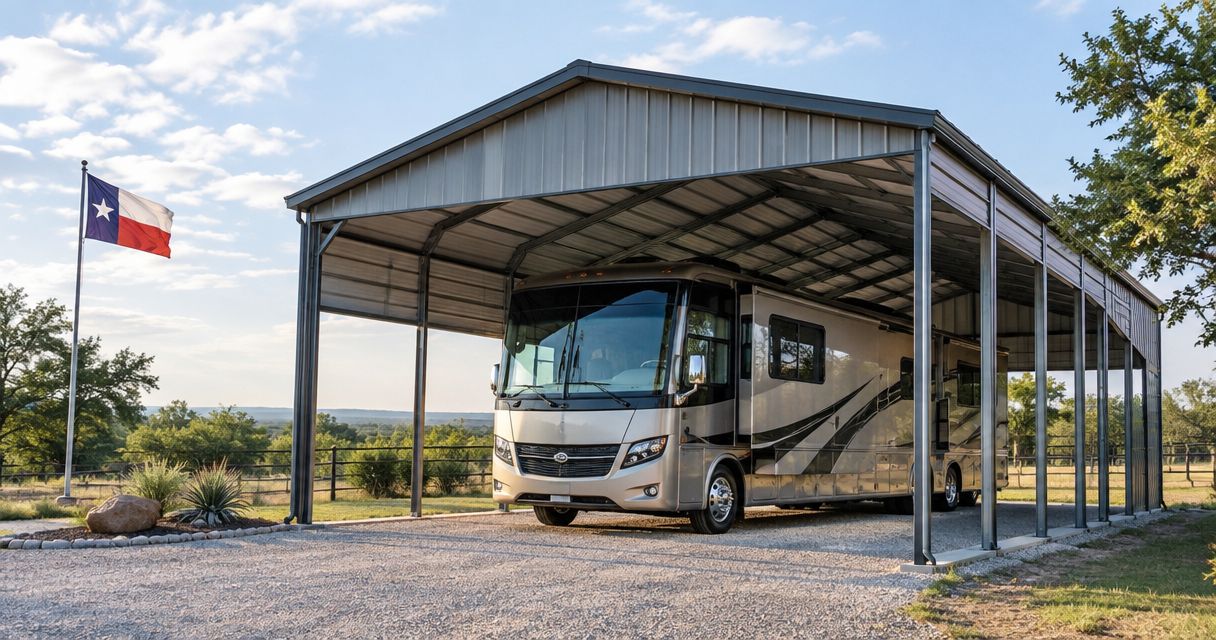
- Open-sided hay barns beat enclosed structures for feed storage because airflow prevents mold in humid counties.
- Livestock barns with stalls need higher eave heights and ventilation planning than general storage buildings.
- DIY metal building kits work for small-acreage owners comfortable with a foundation crew and a weekend crew of their own.
- An ag barndominium combines living space and workspace for owner-operators who want to live where they work.
Why this matters
A metal building bought for the wrong job costs more in the long run than one bought right the first time. Enclosed storage that traps humidity ruins round bales in a season. A livestock barn without enough clear height chokes airflow and stresses cattle in August. Texas weather does not forgive a mismatched building, and re-doing a structure two years in is a bigger expense than getting the spec right in 2026.
The five building types below cover the real use cases Texas landowners ask about most: equipment storage, hay and feed, livestock, DIY budget builds, and combined live/work barndominiums. Texas Metal Structures builds all five configurations, and the comparison below is honest about where each one falls short, not just where it wins.
What makes the best agricultural metal building
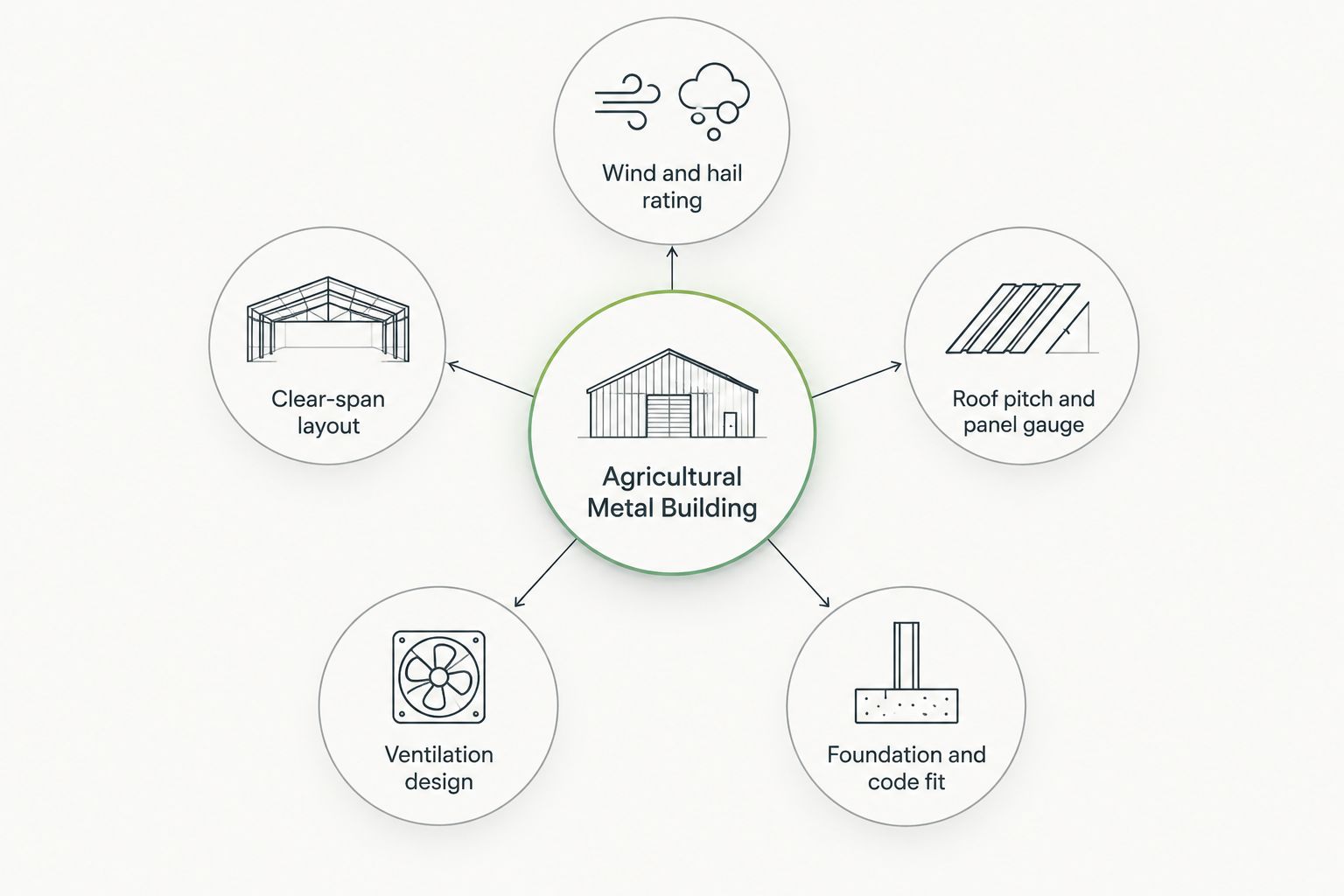
- Wind and hail rating — Gulf Coast counties see higher wind-load requirements than inland Texas, and hail resistance matters statewide, not just near the coast.
- Clear-span layout — no interior support columns means equipment, hay stacks, or stalls aren't fighting around posts.
- Roof pitch and panel gauge — steeper pitches shed water faster in East Texas humidity; panel gauge affects dent resistance in hail country.
- Ventilation design — ridge vents, eave gaps, and side openings matter more for livestock and hay than for dry equipment storage.
- Foundation and code fit — county permitting rules and soil conditions vary across Texas, and the building has to match both.
- Room to expand or convert — a barn that can add a lean-to, a stall row, or living quarters later saves a second build.
At a glance
| Building type | Best for | Standout feature | Key limitation |
|---|---|---|---|
| Custom clear-span equipment barn | Large equipment & multi-use farms | No interior columns, full-width bay doors | Costs more upfront than a basic kit |
| Open-sided hay & feed barn | Hay and feed storage | Airflow prevents mold and heat buildup | Minimal security for stored equipment |
| Livestock barn with stalls | Cattle and horse operations | Higher eave height, ventilation planning | Needs more site prep for drainage |
| DIY metal building kit | Budget-conscious small acreage | Lower material cost, self-build option | Foundation and crew still required |
| Ag barndominium | Owner-operators living on site | Combines living space and workspace | Longer design and permitting timeline |
1. Custom clear-span equipment barn: best for large equipment and multi-use farms
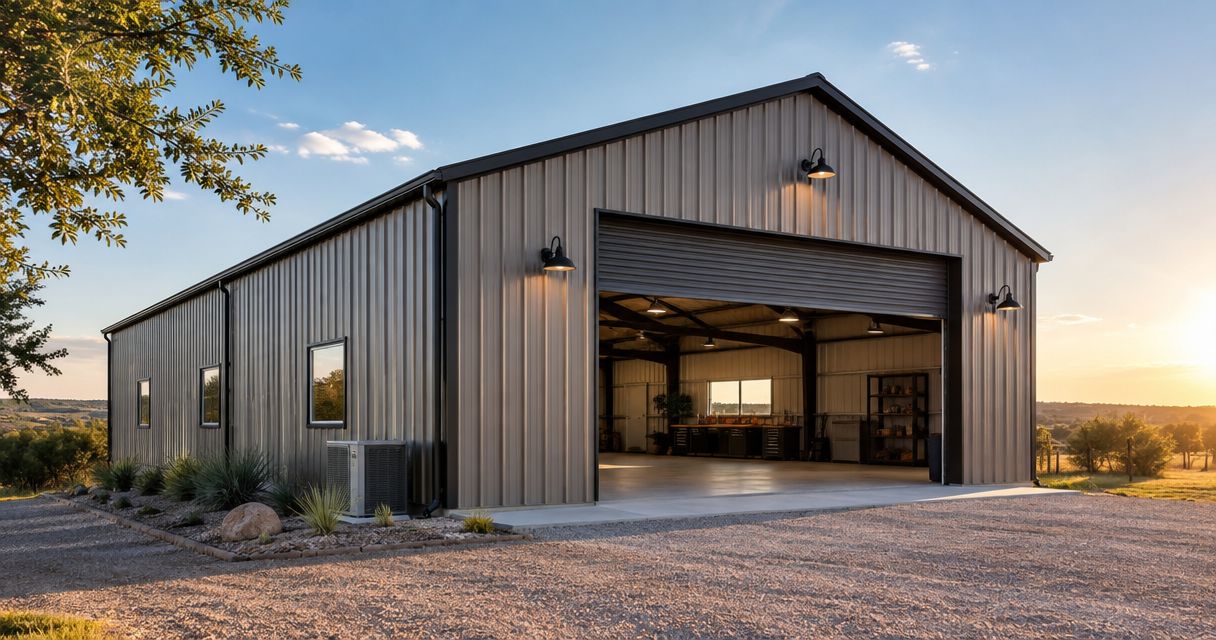
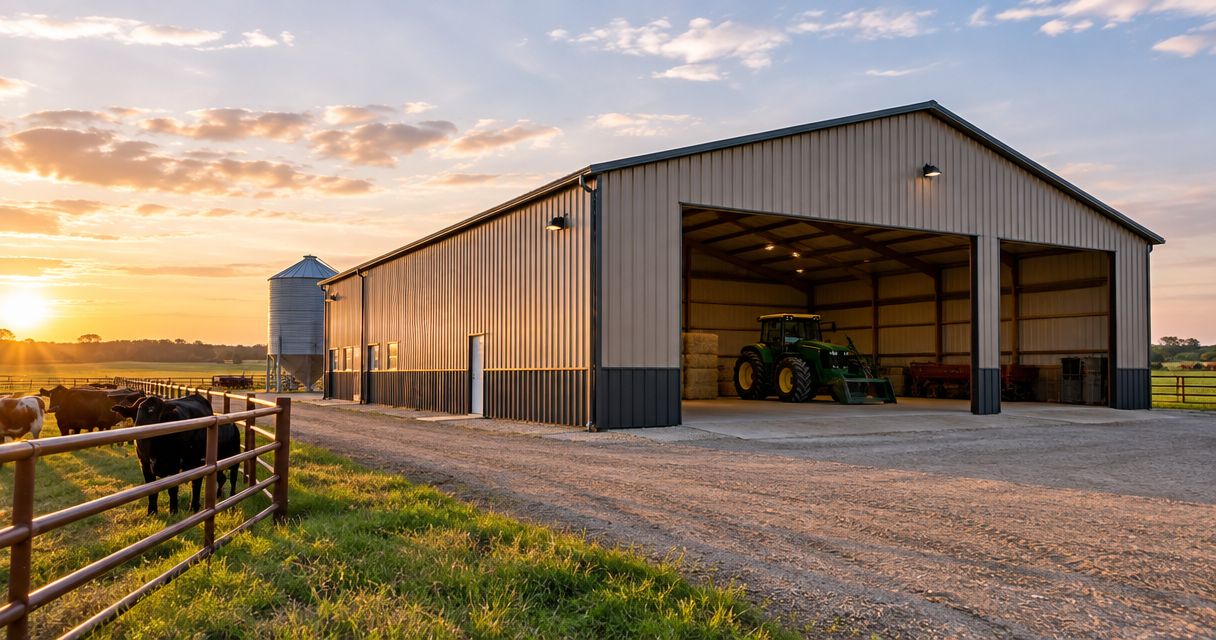
A clear-span metal building removes interior support posts so tractors, combines, trailers, and implements park without maneuvering around columns. Bay doors run the full width of the structure, and the frame is built to the wind and snow loads your county actually requires rather than a generic default.
Custom clear-span barn pros:
- No interior columns, so equipment of any width fits
- Framing and roof pitch specified for your county's wind and hail exposure
- Room to add lean-tos or a second bay later
- Doubles as a workshop or general-purpose barn when equipment isn't in it
Custom clear-span barn cons:
- Higher upfront cost than a stock kit
- Longer lead time because it's built to spec, not off a shelf
- Overkill for an operation that only needs hay or feed storage
Best for: operations running multiple pieces of heavy equipment or needing one structure to do several jobs.
Verdict: Buy — this is the default pick when you're not sure which of the other four fits, because it flexes into most of their jobs.
2. Open-sided hay and feed barn: best for hay and feed storage
Humidity, not rain, is what ruins hay in Texas. An open-sided or three-sided barn moves air through the stack constantly, which keeps round bales from molding and heating in the middle. Feed storage benefits the same way — grain and supplement bags stay drier in a ventilated structure than a sealed one.
Open-sided hay barn pros:
- Continuous airflow prevents mold and internal heating in stacked hay
- Lower material cost than a fully enclosed building of the same footprint
- Fast to load and unload with no doors to manage
- Roof-only structure works on a simpler foundation in many counties
Open-sided hay barn cons:
- Almost no security for anything valuable stored inside
- Wind-driven rain can reach the first few feet of the open side
- Not a fit for equipment that needs to stay dust-free
Best for: ranches and hay operations where volume and airflow matter more than lockable storage.
Verdict: Buy — for hay-heavy operations, this beats an enclosed barn on cost and on hay quality.
3. Livestock barn with stalls: best for cattle and horse operations
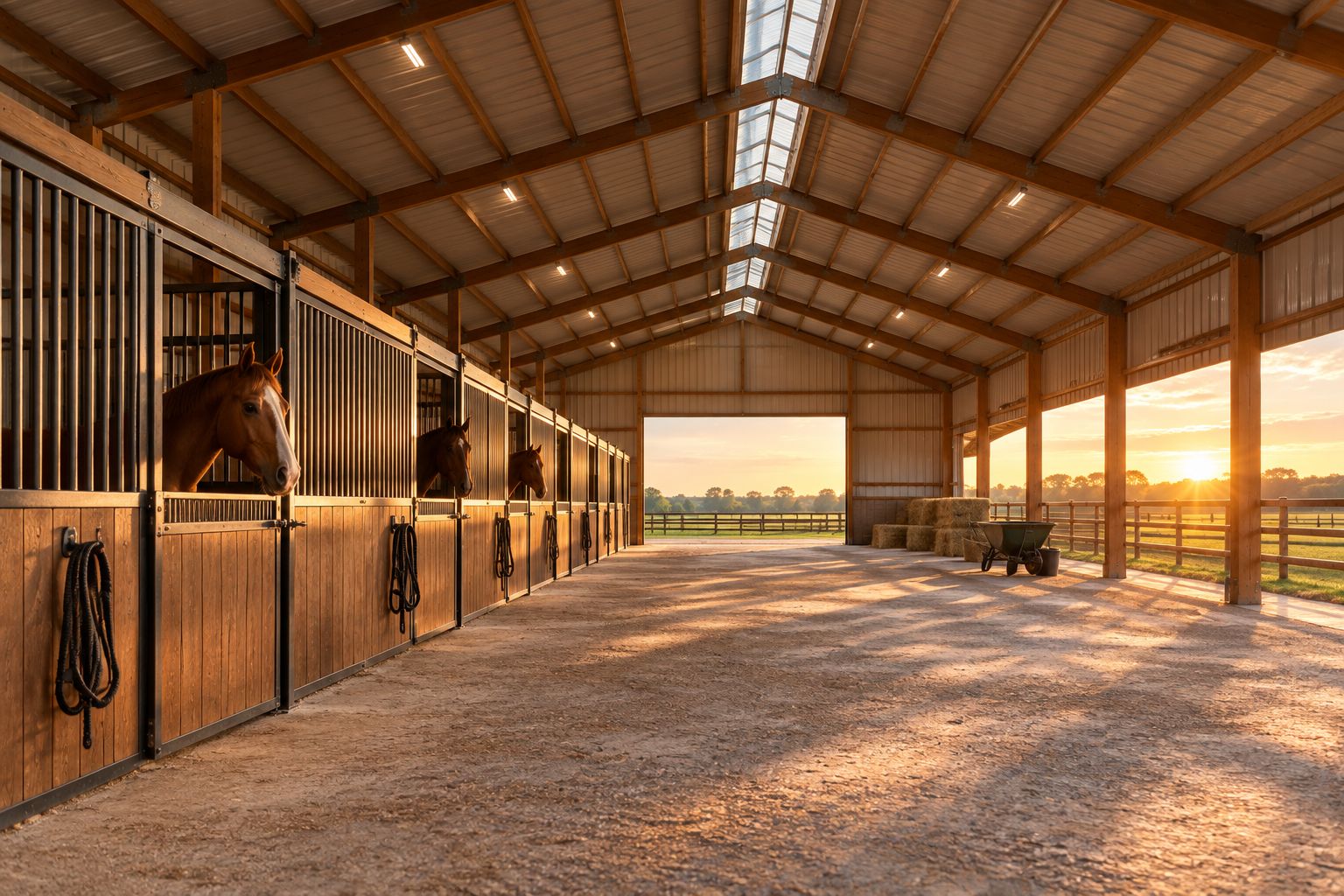
A livestock barn earns its keep on ventilation and eave height, not square footage. Ridge vents and eave gaps pull hot air out in July and August, and taller sidewalls keep ammonia and heat from concentrating at animal level. Stall layout, wash racks, and tack rooms get built into the frame rather than bolted on afterward.
Livestock barn pros:
- Ventilation planning keeps interior temperatures and ammonia buildup manageable
- Stall layout customized to cattle, horses, or mixed livestock
- Concrete or all-weather flooring options built into the plan
- Higher eaves accommodate hay lofts or overhead storage
Livestock barn cons:
- More site prep needed for drainage around stalls and wash areas
- Costs more per square foot than an open hay barn
- Ventilation retrofits after the fact are expensive; get it right at design stage
Best for: cattle, horse, or mixed livestock operations that need year-round shelter, not seasonal cover.
Verdict: Buy — for any operation with animals living in the structure daily, this is worth the extra design time over a generic barn.
4. DIY metal building kit: best for budget-conscious small acreage owners
A kit ships with pre-cut, pre-drilled steel components and bolts together on a foundation you or a contractor pour separately. It's the lowest-cost entry point into a real metal structure, and it works well for smaller footprints where a crew of two or three can manage assembly over a few weekends.
The best metal building kits for Texas DIY builders breaks down which kit sizes and styles hold up best against Texas wind and heat, since not every kit on the market is engineered for local conditions.
DIY kit pros:
- Lower material cost than a fully custom build
- Standard sizes ship faster than custom-engineered structures
- Manageable for a small crew with basic tools and some construction experience
DIY kit cons:
- Foundation work is still a separate job and still needs to be right
- Standard sizes don't flex the way a custom clear-span does
- Assembly mistakes on wind bracing show up the first time a real storm hits
Best for: small-acreage owners who want a real metal structure without the cost of a fully custom build, and who have the time or crew to assemble it.
Verdict: Hold — buy this if you're comfortable managing assembly and foundation work yourself; skip it if you'd rather not manage a build timeline on top of running the farm.
5. Ag barndominium: best for owner-operators who live on site
A barndominium puts living quarters and workspace under one roof, which fits owner-operators who want to be steps from equipment, livestock, or a shop instead of driving in from town. The best barndominium floor plans for Texas families covers layout options that keep living space separated from dust, noise, and animal traffic on the working side.
Ag barndominium pros:
- Combines a home and a working barn or shop in one structure
- Cuts commute time between house and operation to zero
- Floor plan can separate living quarters from the working bay with its own entrance and utilities
Ag barndominium cons:
- Longer design and permitting timeline than a standalone barn
- Living quarters need insulation, HVAC, and finish work a plain barn doesn't
- Combining uses under one roof means noise and dust control matter more
Best for: owner-operators who want to live where they work rather than maintain two separate structures.
Verdict: Buy — for full-time operators, the convenience outweighs the longer build timeline.
Get a Texas ag building consult
Compare framing, roof style, and layout options for your acreage.
How we ranked these
Each building type is scored against the same five factors: wind and hail rating, clear-span layout, roof pitch and panel gauge, ventilation design, and foundation fit for local code. Roof style plays a bigger role than most buyers expect — the best metal building roof styles for Texas weather shows how pitch and panel gauge change hail and heat performance across a 2026 build. Buildings that need higher wind ratings typically run heavier framing, often 14-gauge structural steel with 26-gauge roof panels, compared to lighter kit-grade steel.
Which agricultural metal building should you choose?
If you're unsure which of the five fits, default to the custom clear-span equipment barn — it's the only one of the five that flexes into hay storage, equipment storage, and general shop use without a redesign. Pick the open-sided hay barn only if hay and feed are the sole job. Pick the livestock barn only when animals live in the structure daily. The DIY kit is right for a tight budget and a willing crew, and the ag barndominium is right when living on site matters more than a lower price tag.
FAQ
What's the best agricultural metal building for Texas ranches in 2026?
A custom clear-span equipment barn is the best all-around choice for most Texas ranches in 2026 because it handles equipment, general storage, and shop use without interior columns getting in the way.
Is an open-sided barn better than an enclosed barn for hay storage?
Yes, for hay specifically. Open-sided barns keep air moving through the stack, which prevents the mold and internal heating that ruins bales in enclosed, humid structures.
How much does a metal agricultural building cost in Texas?
Cost varies by size, gauge, roof style, and site work, so check current pricing directly with a builder rather than relying on a fixed figure, since foundation and permitting requirements differ by county.
Can I build my own metal agricultural building?
Yes, with a DIY metal building kit, though you'll still need to arrange foundation work separately and have a crew comfortable with structural assembly and wind bracing.
What wind rating do metal buildings need in Texas?
Requirements run higher along the Gulf Coast than inland Texas, so the correct rating depends on your county's building code rather than a single statewide number.
Do livestock barns need different ventilation than equipment barns?
Yes. Livestock barns need ridge vents and taller eave heights to manage heat and ammonia buildup, while equipment barns mainly need to stay dry and dust-controlled.
Can a metal barn include living quarters?
Yes, this is typically built as an ag barndominium, which separates living space from the working bay while sharing one roofline and foundation.
What roof pitch works best for Texas agricultural buildings?
Steeper pitches shed water faster in humid East Texas counties, while flatter pitches are common in drier West Texas regions, so the right pitch depends on local rainfall patterns.
One last thing
The single biggest mistake on Texas ag builds isn't the building type — it's skipping ventilation planning on livestock barns because it feels like an add-on instead of part of the frame design. Ridge vents and eave gaps are far cheaper to build in from the start in 2026 than to retrofit into a finished structure after the first hot summer proves the airflow was wrong.